
Common Powder Mixing Challenges and How to Solve Them
Powder mixing is a critical process in many industries, including food, pharmaceuticals, chemicals, cosmetics, construction materials, and new energy applications. Although powder mixers are designed to create uniform blends, manufacturers often encounter challenges that affect product quality, production efficiency, and operating costs. Problems such as uneven mixing, material segregation, dust generation, and difficult discharge are usually related to material characteristics, equipment selection, or process conditions. Understanding these common challenges helps manufacturers develop more reliable powder processing solutions. One of the most common problems in powder mixing is inconsistent blending. A batch may appear mixed on the surface but still contain areas with different ingredient concentrations. This issue often occurs when powders have different particle sizes, densities, or flow characteristics. If the mixing equipment cannot create sufficient material circulation, some areas inside the vessel may receive more of one component than others. Selecting a mixer based on the actual behavior of the materials, rather than only production capacity, is essential for achieving uniform results.
Material segregation is another major challenge faced during powder processing. Even after successful mixing, particles may separate during discharge, transportation, or storage. This is especially common when ingredients have significant differences in particle size or bulk density. Larger or heavier particles tend to move downward, while smaller or lighter particles may remain suspended. Using an appropriate mixing method, controlling discharge speed, and reducing unnecessary handling after mixing can help maintain product consistency. Dust generation is also a concern, particularly when processing fine powders. Excessive dust not only creates material loss but may also affect workplace safety, equipment cleanliness, and production efficiency. Fine particles can become airborne during feeding, mixing, and discharge operations. Solutions include using enclosed equipment designs, improving feeding systems, installing dust control measures, and optimizing mixing speed to prevent excessive air movement inside the mixer.
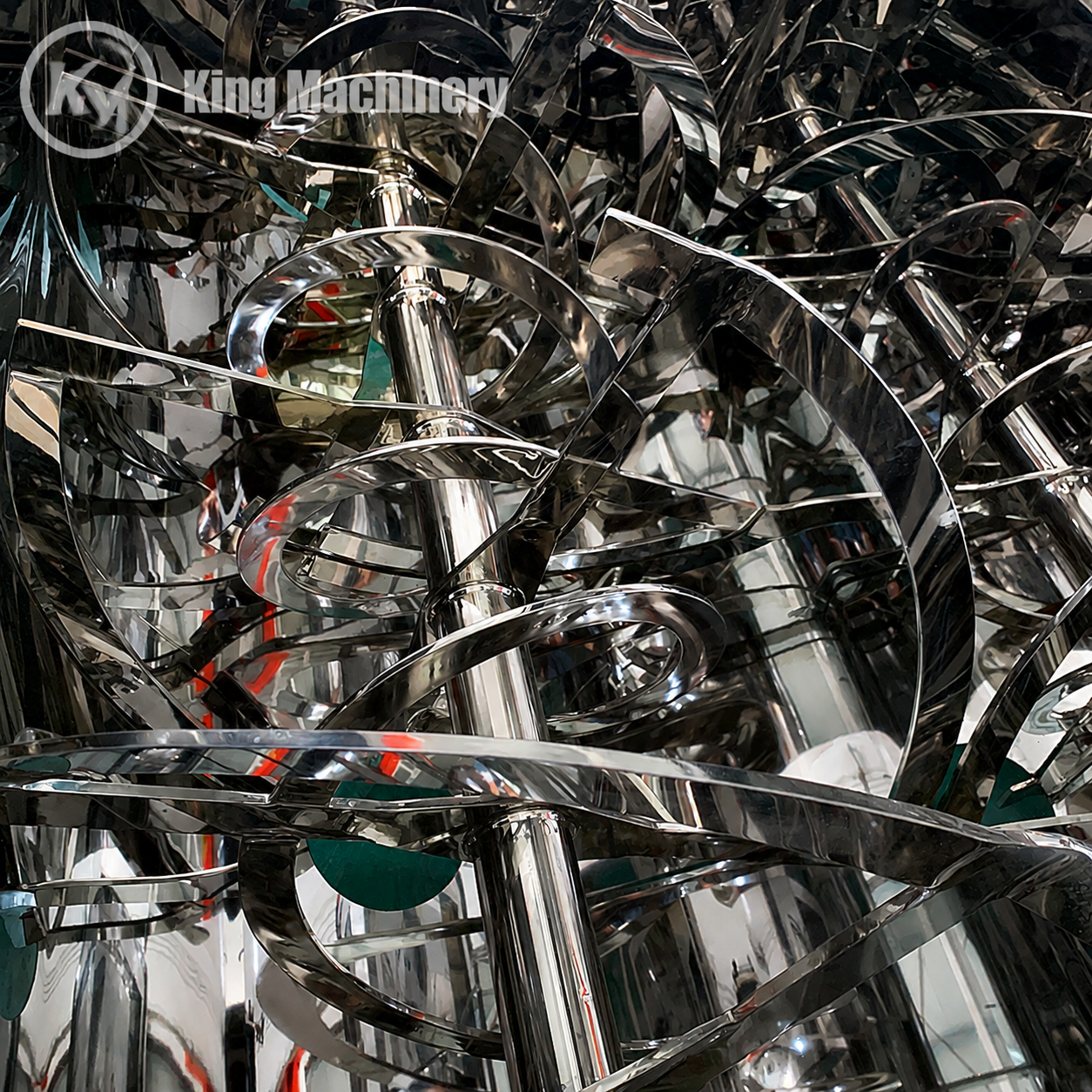
Agglomeration and powder clumping can significantly reduce mixing quality. Materials with high moisture content, strong cohesion, or poor flowability may form lumps that are difficult to break apart during processing. This problem is common in industries handling sticky powders or materials that absorb moisture easily. Selecting a suitable mixer type, controlling environmental conditions, and optimizing agitator design can improve particle dispersion and reduce the formation of unwanted clusters. Another challenge is achieving the right balance between mixing efficiency and product protection. Some materials require strong mechanical action to achieve uniformity, while others are sensitive and may be damaged by excessive shear. Pharmaceutical ingredients, coated particles, and specialty chemical powders often require gentle handling to maintain their original properties. Choosing between ribbon mixers, paddle mixers, tumble mixers, or other technologies should depend on the material sensitivity and required mixing performance.
Equipment wear is another factor that affects long-term powder mixing performance. Abrasive powders can gradually damage mixing blades, shafts, and internal surfaces, leading to increased maintenance costs and unexpected downtime. Materials used in battery manufacturing, minerals, ceramics, and chemical processing may require more durable construction. Selecting corrosion- and wear-resistant materials such as SS316, duplex SS2205, titanium, or Hastelloy can extend equipment service life and improve reliability. Cleaning and material changeover can also become production bottlenecks. Industries that produce multiple formulations often need to clean equipment frequently between batches. Poorly designed mixers may contain areas where powder accumulates, increasing cleaning time and the risk of cross-contamination. Equipment with smooth internal surfaces, optimized structures, and hygienic designs helps simplify maintenance and supports more efficient production schedules.
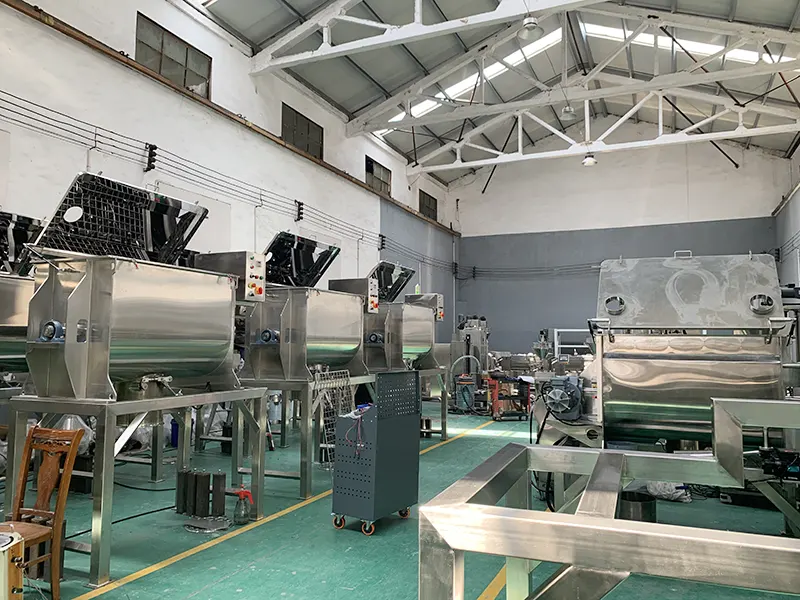
Scaling up from laboratory or pilot production to industrial manufacturing presents another common difficulty. A formulation that performs well in a small mixer may not achieve the same results in a larger system. Changes in batch size, mixing energy, particle movement, and equipment geometry can influence final performance. Conducting mixing trials and evaluating process conditions before full-scale production helps reduce the risks associated with scale-up. Choosing the wrong mixer type is often the root cause behind many powder processing problems. Ribbon mixers are typically suitable for efficient blending of free-flowing powders, while paddle mixers provide gentler mixing for fragile materials. Double cone mixers are often used when product protection and low-shear blending are priorities. Understanding the advantages and limitations of each mixing technology allows manufacturers to select equipment that matches their specific application.
Integration with other processing equipment also affects overall powder handling efficiency. A complete production system may include powder feeders, conveyors, storage tanks, mixers, and filling machines. Poor coordination between these stages can create material flow problems even when the mixer itself performs well. Designing the entire process as a connected system improves consistency and reduces manual intervention. Many powder mixing challenges can be prevented through customized equipment design. Every material has unique characteristics, and standard equipment may not always provide the best solution. Adjustments to mixer size, agitator structure, discharge design, material selection, and automation functions can significantly improve performance. Working with an experienced manufacturer allows the equipment to be developed around the actual production requirements.