
How to Choose the Right Powder Mixer for Your Manufacturing Process
Choosing the right powder mixer is a critical decision for manufacturers because mixing performance directly affects product consistency, production efficiency, and overall product quality. While many companies focus mainly on equipment capacity, price, or motor power, these factors alone cannot guarantee successful mixing results. The ideal powder mixer should be selected according to material characteristics, production requirements, processing conditions, and future expansion plans. The first consideration when selecting a powder mixer is understanding the properties of the materials being processed. Different powders behave differently depending on particle size, density, moisture content, flowability, and chemical composition. A mixer designed for free-flowing powders may not perform well with sticky or fragile materials. Evaluating these characteristics before equipment selection helps prevent problems such as uneven blending, material segregation, excessive dust, and unnecessary production losses.
Particle size distribution has a significant influence on mixing performance. Fine powders often have stronger interactions between particles and may easily form agglomerates during processing. Larger particles usually flow more freely but may separate from smaller particles if the mixing process is not properly controlled. Selecting a mixer with suitable movement patterns helps maintain uniform distribution and improves the consistency of the final product. Bulk density is another important factor that manufacturers should consider. When powders with different densities are mixed together, heavier particles may settle while lighter particles remain suspended, creating an uneven mixture. A well-designed mixer must provide sufficient material circulation to overcome these differences. The internal structure, agitator design, and mixing method all influence how effectively the equipment handles density variations.
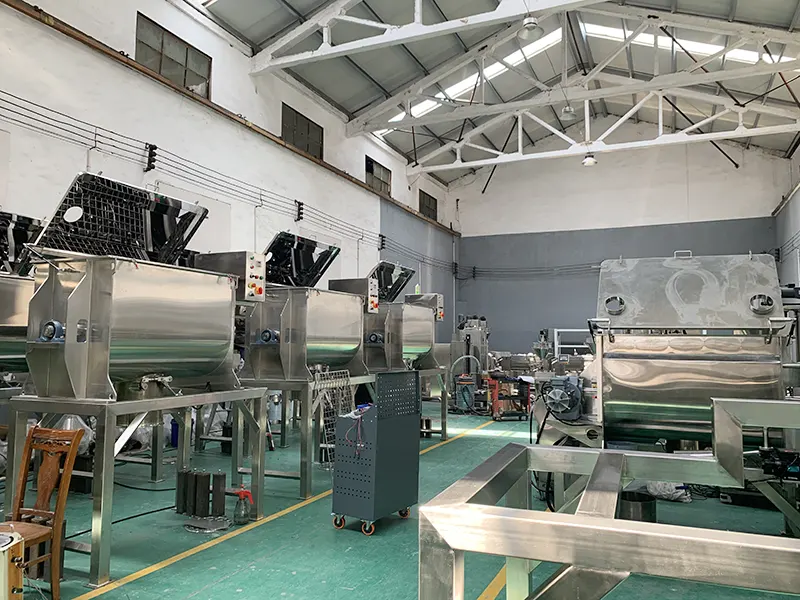
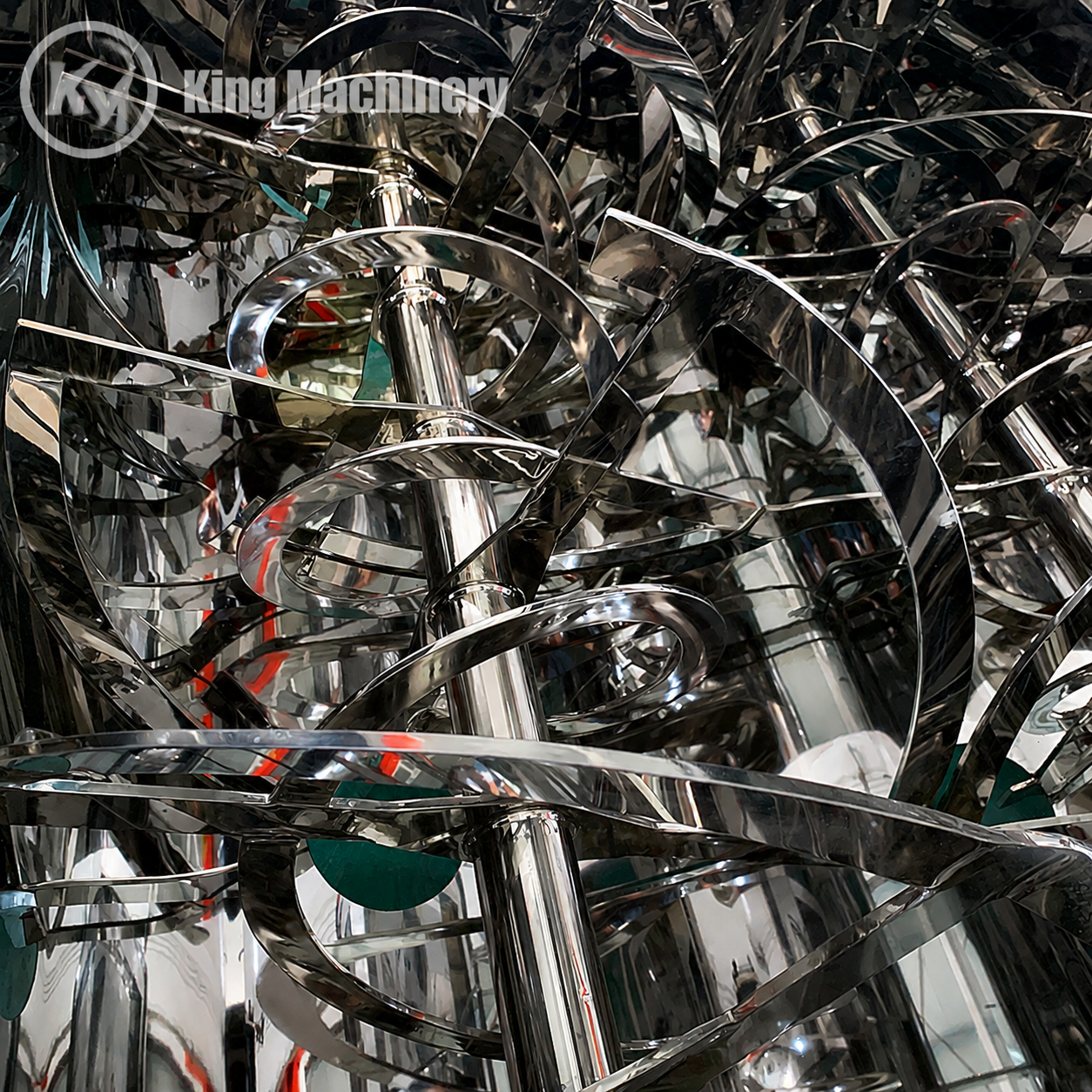
Flowability also determines whether a powder mixer can achieve stable operation. Free-flowing powders are generally easier to process, while cohesive materials may stick to internal surfaces, create blockages, or cause difficulties during discharge. For challenging powders, customized equipment designs with optimized mixing chambers, suitable agitators, and smooth stainless steel surfaces can improve material movement and reduce product residue. Different types of powder mixers are designed for different applications. Ribbon mixers are widely used for efficient blending of dry powders and granules because they provide strong circulation and shorter mixing cycles. Paddle mixers offer gentler mixing and are suitable for materials that require reduced mechanical impact. Double cone mixers are often selected for fragile products that need uniform blending with minimal particle damage. The best choice depends on the relationship between the mixer design and the material characteristics.
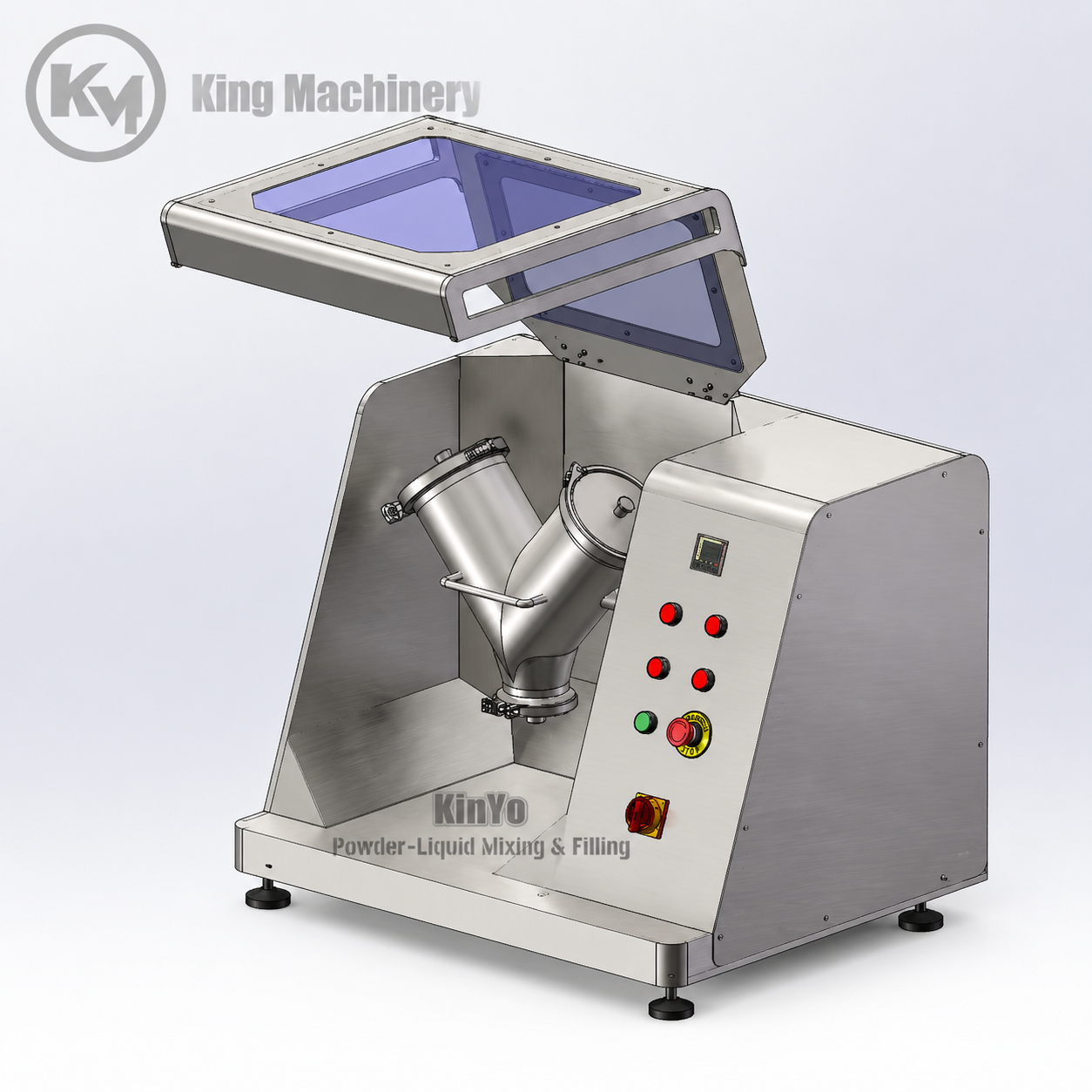
Production capacity should also be evaluated before investing in mixing equipment. A mixer suitable for small-scale testing may not meet the requirements of large-scale industrial production. Manufacturers should consider current batch sizes, future capacity increases, automation requirements, and integration with other equipment. Selecting a mixer with appropriate flexibility helps avoid costly upgrades when production demand grows. The construction material of the mixer is another key consideration, especially for industries handling corrosive or sensitive materials. Stainless steel options such as SS316 provide excellent corrosion resistance for many applications, while duplex SS2205, titanium, and Hastelloy may be required for more demanding environments. Choosing the correct material improves equipment durability, reduces maintenance frequency, and extends service life.
Hygiene requirements are particularly important in food, pharmaceutical, cosmetic, and chemical production. Powder mixers used in these industries should feature smooth internal surfaces, high-quality welding, minimal dead zones, and easy cleaning designs. These features help prevent contamination, reduce cleaning time, and support consistent production between different batches. Energy efficiency and maintenance requirements should not be ignored during the selection process. A high-quality powder mixer should provide reliable performance while minimizing energy consumption and downtime. Durable components, easy access for maintenance, and proper equipment design contribute to lower operating costs throughout the equipment lifecycle.
For many manufacturers, customized powder mixing equipment provides better results than standard machines. Each production process has unique requirements, and modifications to vessel design, agitator configuration, discharge systems, and automation functions can significantly improve performance. Working with an experienced manufacturer allows the equipment to be designed around the actual production conditions rather than adapting the process to a standard machine. Ultimately, choosing the right powder mixer requires a complete understanding of the relationship between material properties and equipment performance. Factors such as particle characteristics, mixing method, production scale, construction materials, hygiene standards, and future development plans should all be considered. A properly selected powder mixer can improve product quality, reduce waste, increase efficiency, and provide long-term value for manufacturers seeking reliable powder processing solutions.