
What Happens When an Agitator Tank Is Overfilled During Production?
Overfilling an agitator tank may seem like a simple way to increase batch output, but operating above the recommended working volume can affect much more than the available space inside the vessel. The liquid level changes the relationship between the impeller, tank walls, surface, and internal components, which can alter the entire flow pattern. As a result, an overfilled tank may experience poor mixing, increased motor load, excessive foaming, or difficulties during discharge. For manufacturers, understanding these effects is important when determining a practical working volume for each production process. One of the first problems is reduced circulation. An agitator is normally designed around a specific working volume and liquid level. When the tank is filled beyond this range, the impeller may no longer generate sufficient circulation throughout the increased liquid volume. Areas farther from the impeller can become poorly mixed, creating differences in concentration or temperature. Simply extending the mixing time may not completely solve the problem because the underlying issue is insufficient fluid movement.
Overfilling can also change the distance between the liquid surface and the impeller. Depending on the tank and agitator configuration, this may reduce the ability of the impeller to circulate material from the lower section toward the upper section. In some cases, the increased liquid depth creates a more demanding mixing load, particularly when the product has relatively high viscosity. The agitator may continue rotating normally while the actual mixing quality gradually deteriorates. Motor loading is another consideration. A larger working volume generally means more material must be moved by the agitator. If the tank is operated significantly above its designed capacity, the motor and gearbox may experience higher loads than intended. This can increase energy consumption and place additional stress on the shaft, bearings, seals, and drive components. Repeated operation under excessive load may eventually contribute to premature equipment wear.
Overfilling may also increase the risk of splashing and overflow. This becomes particularly important when the product foams during agitation or when the tank contains ingredients that expand during processing. A liquid that appears safely below the top of the vessel before mixing may rise considerably once the agitator starts operating. Maintaining sufficient freeboard provides space for surface movement, foam formation, and changes in liquid volume during production. For liquid-powder mixing applications, an excessive fill level can make powder incorporation more difficult. Powders introduced into an overfilled vessel may remain near the surface, float temporarily, or form agglomerates before being drawn into the main circulation pattern. The problem can become more noticeable when powders have poor wettability or when the liquid is relatively viscous. Proper feeding location and controlled addition rates are therefore important alongside the tank's working volume.
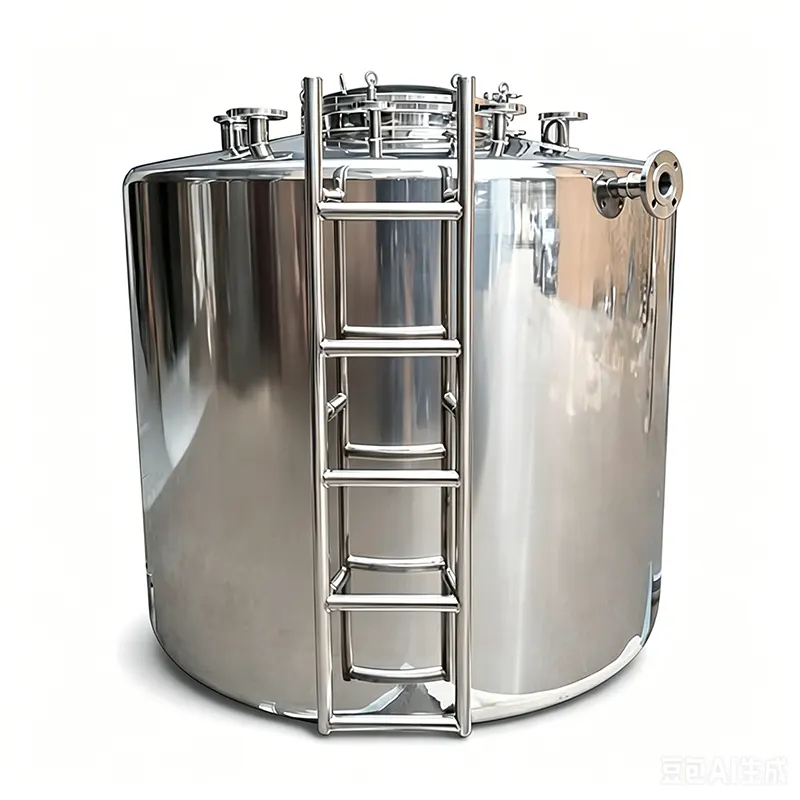
Temperature uniformity can also be affected. In processes involving heating or cooling, the mixing system needs to circulate the entire batch effectively so that heat is distributed evenly. When the tank is overfilled, the available agitation may not be sufficient to maintain uniform temperature throughout the increased volume. This can create temperature differences between the tank wall, bottom, and upper liquid layer, potentially affecting product quality or processing time. Another concern is the possibility of increased foaming and air entrainment. Some products, including surfactant-based formulations, food products, cosmetics, and chemical solutions, are particularly sensitive to agitation at the liquid surface. Excessive filling can alter the relationship between the liquid surface and the impeller, changing turbulence and potentially making foam management more difficult. Once foam begins to occupy the available free space, overflow and cleaning problems can follow.
The consequences become more significant when the tank is part of a larger automated production line. An overfilled mixing tank may create downstream problems for pumps, transfer pipes, filters, filling machines, or storage vessels. If the batch cannot be discharged smoothly or contains inconsistent material, the problem can extend beyond the mixing stage and interrupt the entire production cycle. This is why manufacturers should distinguish between total tank capacity and working capacity. The total volume represents the physical volume of the vessel, while the working volume defines the practical operating range under which the mixing system is expected to perform correctly. The difference provides necessary space for agitation, foaming, thermal expansion, ingredient addition, and safe operation. Designing a tank based only on its maximum physical capacity can therefore lead to unrealistic production expectations.
For custom agitator tanks, working volume should be established during the engineering stage. Tank dimensions, impeller diameter, impeller position, motor power, liquid properties, operating temperature, and expected batch size should be evaluated together. For processes involving changing production volumes, variable-speed agitation or other design adjustments may provide additional flexibility without requiring the tank to operate outside its intended range. Ultimately, overfilling an agitator tank is not simply a matter of putting more material into the vessel. It can change mixing patterns, increase mechanical loading, reduce temperature uniformity, create foaming and overflow risks, and affect downstream processing. Maintaining an appropriate working volume helps protect equipment and product quality while keeping the mixing process predictable. For specialized applications, working with an experienced manufacturer to determine tank dimensions, agitator configuration, and operating volume according to actual process conditions can provide a more reliable solution than maximizing the vessel's nominal capacity.