
How Double-Shaft Paddle Mixers Handle Powders That Resist Conventional Blending
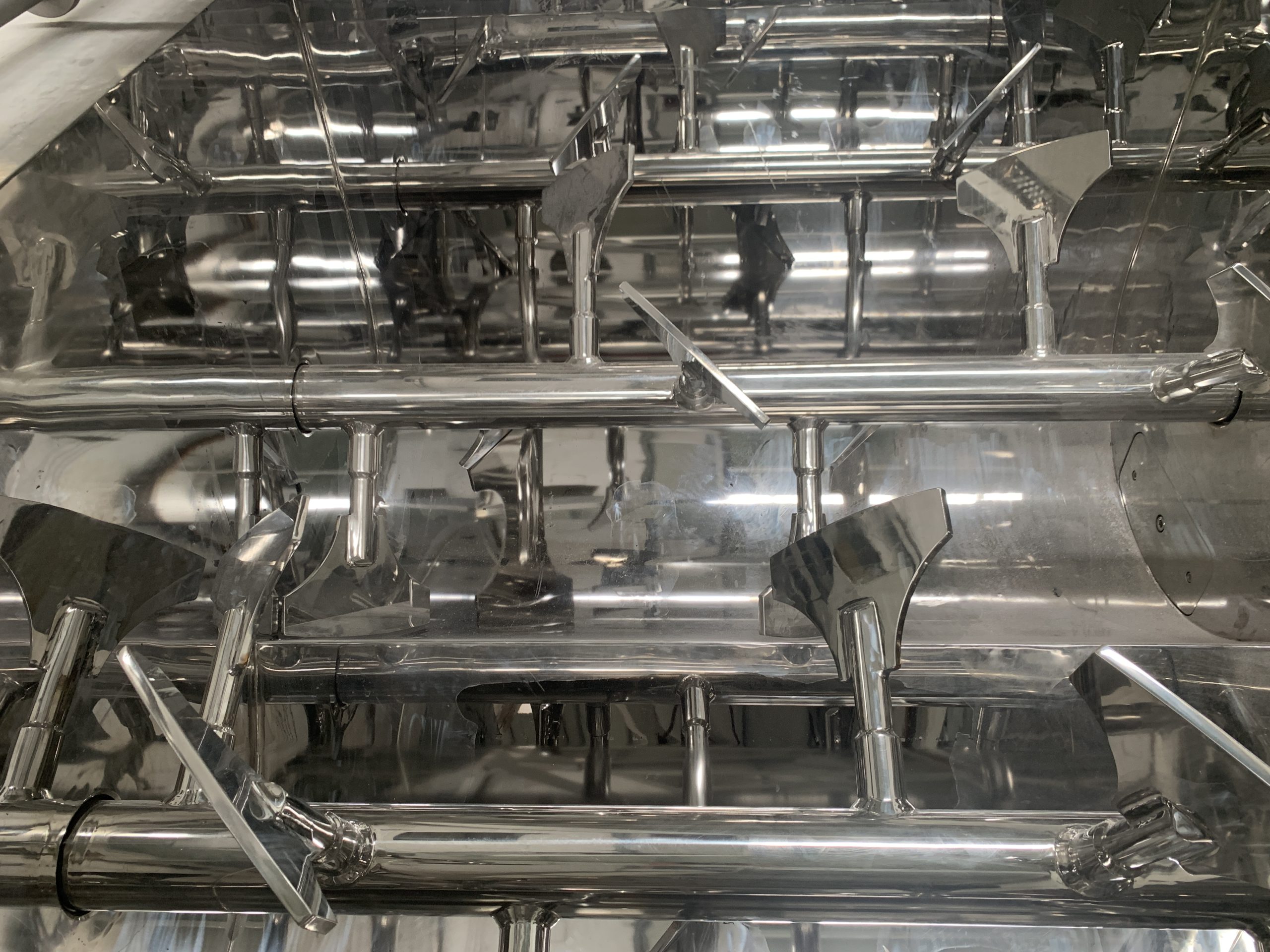
Some powders are easy to mix because they flow freely and quickly respond to conventional agitation. Others behave very differently. Fine particles may cling together, materials with different densities may separate, and cohesive or irregular powders can resist movement inside a conventional mixer. For these applications, a double-shaft paddle mixer can provide a more effective approach by creating active material movement across a larger portion of the mixing chamber. A double-shaft paddle mixer uses two parallel shafts fitted with paddle assemblies that move through the powder as they rotate. Instead of relying on a single central mixing path, the two shafts work together to lift, fold, and redistribute material. This creates a more complex movement pattern that can be useful when powders are difficult to circulate or require more intensive contact between different ingredients.
One advantage of this configuration is the way it promotes movement throughout the mixing chamber. Difficult powders can form stagnant areas when there is not enough material circulation, particularly around the bottom or corners of a mixer. The interaction between the two paddle shafts helps continually move material through different zones, reducing the likelihood that a portion of the batch remains relatively untouched. Powder density differences can also make conventional blending difficult. When a formulation contains both lightweight and heavy ingredients, the components may naturally separate during handling. A well-designed double-shaft paddle system can repeatedly lift and redistribute these materials, helping bring particles back into the main mixing flow. This is particularly useful when maintaining a consistent composition is more important than simply reducing mixing time.
Cohesive powders present another challenge because particles can stick together rather than flowing freely. Increasing mixing time does not necessarily solve this problem. The mechanical action generated by paddle movement can help break up material clusters and expose more particle surfaces to the surrounding blend. The actual paddle configuration and operating conditions should still be selected according to the characteristics of the material. The mixer can also be useful when the formulation contains materials with different particle sizes. Fine powders can behave almost like a cohesive mass, while larger particles may move more freely. If the mixing action is poorly matched to these differences, the final blend may contain concentration variations. Controlled paddle movement helps repeatedly redistribute the components instead of allowing them to remain in separate regions.
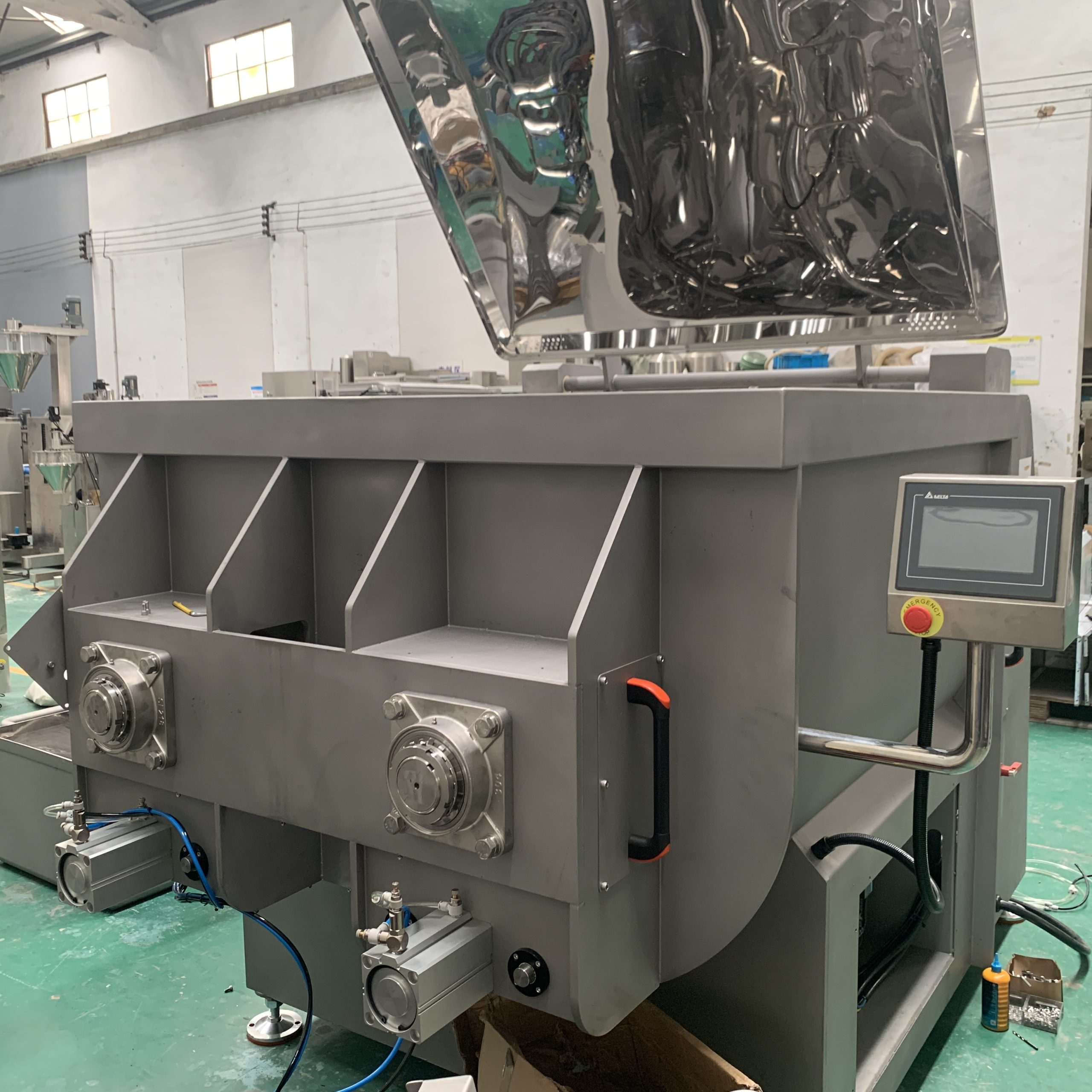
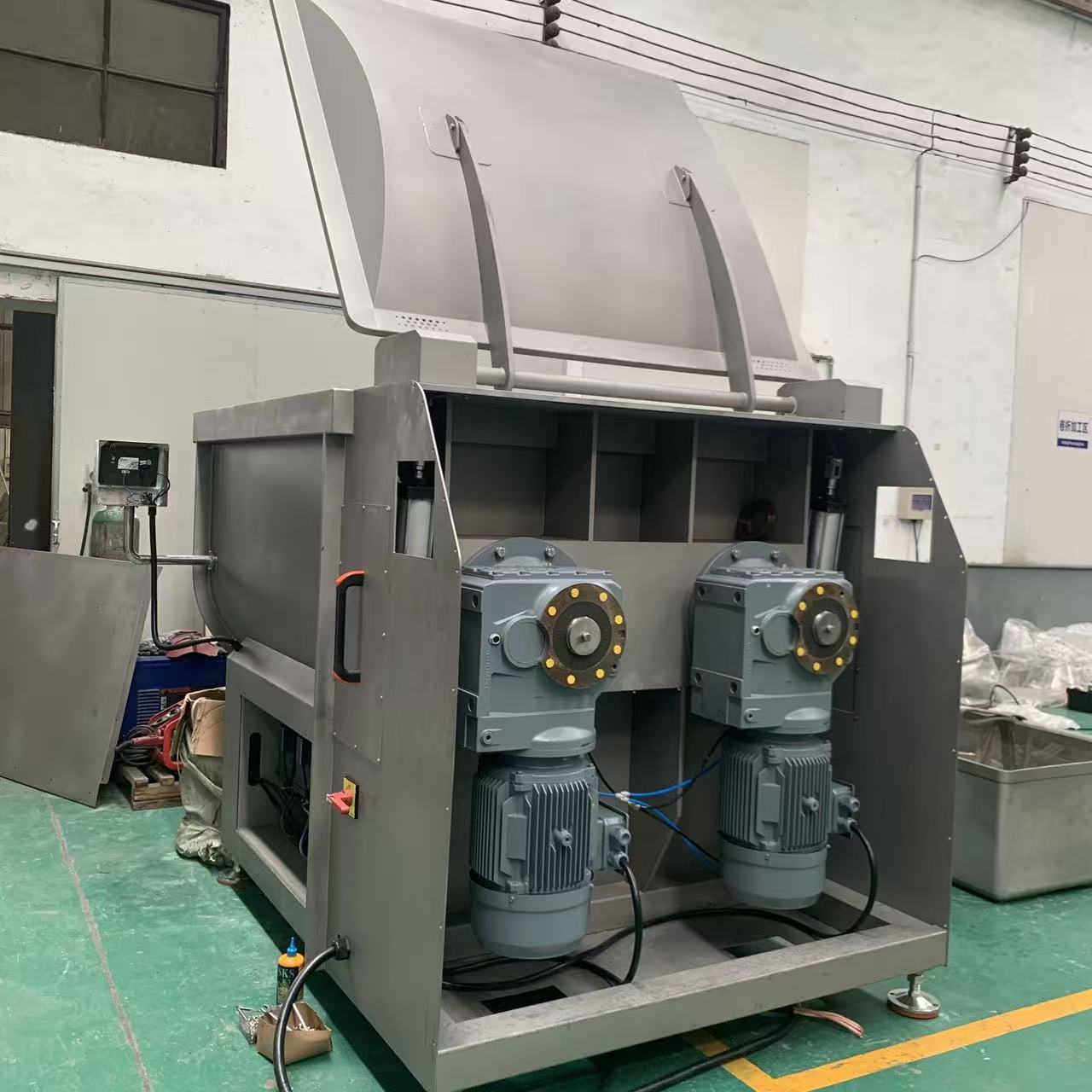
Another consideration is the balance between mixing intensity and product protection. Difficult-to-mix powders may require substantial movement, but excessive mechanical action can damage fragile granules or change the physical properties of sensitive ingredients. A double-shaft paddle mixer does not simply mean operating at maximum speed. Shaft speed, paddle arrangement, fill level, and mixing time can be adjusted to achieve the required result while avoiding unnecessary mechanical stress. The shape and arrangement of the paddles are also important. Paddle geometry determines how material is lifted, pushed, folded, or redirected inside the chamber. Different powder formulations may therefore require different paddle configurations. This is one reason equipment should be specified according to actual material behavior rather than selecting a mixer solely according to batch capacity.
Discharge performance is another area where difficult powders can create production problems. Sticky or cohesive materials may remain inside a mixer after the main batch has been discharged, increasing product loss and making cleaning more difficult. Mixer design, outlet configuration, internal clearance, and paddle movement can all influence how efficiently material leaves the chamber. Double-shaft paddle mixers can also become part of a larger automated powder processing system. They may be connected with powder feeders, conveyors, filling machines, and other equipment to create a continuous or batch-based production process. Coordinating the mixing stage with upstream and downstream equipment helps prevent bottlenecks and allows material flow to remain more consistent across the entire operation.
Material selection is equally important when processing demanding powders. Food, pharmaceutical, chemical, feed, and building-material applications may have different requirements for corrosion resistance, hygiene, surface finish, and equipment durability. Stainless steel construction, including grades selected according to the product and operating environment, can help meet these requirements while supporting long-term industrial use. For powders that resist conventional blending, the best solution is not always a larger motor or a longer mixing cycle. The more important question is how the material actually moves inside the mixer and whether the equipment can generate the required circulation pattern. A double-shaft paddle mixer provides a versatile configuration for challenging powders by combining two active mixing zones and repeated material redistribution.